
Social Media Marketing (SMM) has become one of the most effective digital marketing strategies for businesses of all sizes. With billions of users actively engaging on platforms such as Facebook, Instagram, LinkedIn, X, Pinterest, and YouTube, brands have an incredible opportunity to connect with their target audience, build trust, and increase sales.
What is Social Media Marketing?
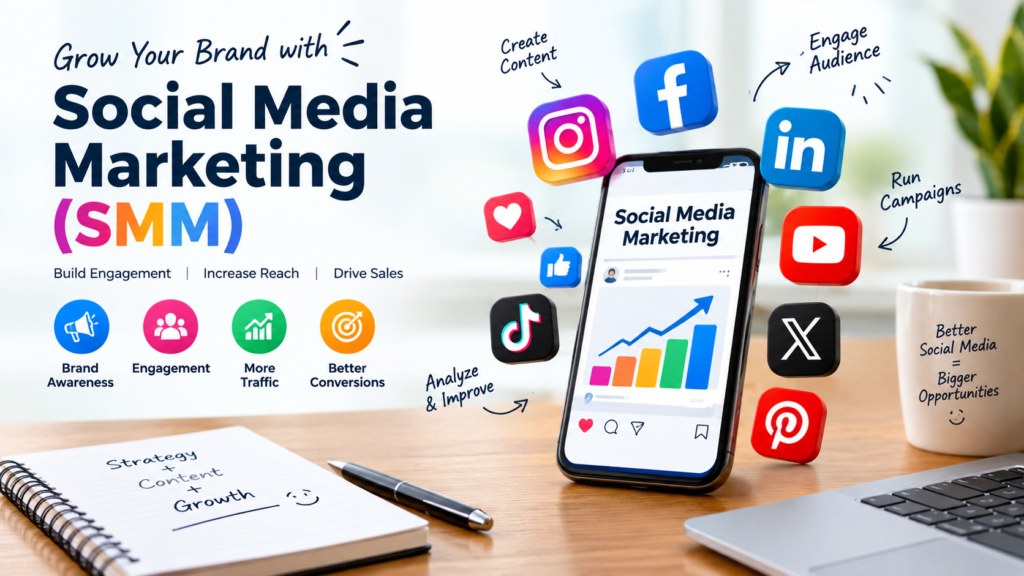
Social Media Marketing is the process of using social media platforms to promote products, services, and brand messages. It involves creating and sharing content, interacting with followers, running paid advertisements, and analyzing performance to improve results.
The primary objective of SMM is to increase brand awareness, engage audiences, generate leads, and drive conversions.
Why is Social Media Marketing Important?
Today’s consumers spend a significant amount of time on social media. Businesses that actively engage with their audience on these platforms can gain a competitive advantage.
Benefits of Social Media Marketing
- Increases brand awareness and visibility.
- Helps reach a larger audience.
- Builds customer trust and loyalty.
- Generates quality leads and sales.
- Improves website traffic.
- Enhances customer support and communication.
Key Components of a Successful SMM Strategy
1. Define Clear Goals
Before starting any campaign, identify what you want to achieve. Common goals include:
- Increasing brand awareness
- Growing followers
- Driving website traffic
- Generating leads
- Boosting sales
2. Understand Your Audience
Knowing your audience helps create content that resonates with their interests and needs. Consider factors such as age, location, profession, and online behavior.
3. Create High-Quality Content
Content is the foundation of social media marketing. Businesses should focus on providing value through:
- Educational posts
- Videos and reels
- Infographics
- Industry news
- Customer success stories
- Promotional content
4. Maintain Consistency
Posting regularly helps keep your audience engaged and strengthens brand recognition. A content calendar can help organize and schedule posts efficiently.
5. Monitor Performance
Track metrics such as reach, engagement, clicks, conversions, and follower growth to understand what works best and optimize future campaigns.
Popular Social Media Platforms for Marketing
Ideal for building communities, running advertisements, and sharing various content formats.
Perfect for visual storytelling through photos, reels, stories, and influencer collaborations.
Best suited for B2B marketing, professional networking, and thought leadership.
YouTube
An excellent platform for video marketing, tutorials, product demonstrations, and educational content.
X (Twitter)
Useful for real-time updates, customer engagement, and trending conversations.
Frequently Asked Questions (FAQ)
1. What is Social Media Marketing?
Social Media Marketing is the use of social media platforms to promote a brand, engage audiences, and achieve business objectives
2. Which social media platform is best for marketing?
The best platform depends on your target audience and business goals. Facebook, Instagram, LinkedIn, and YouTube are among the most popular choices.
3. How often should businesses post on social media?
Consistency is important. Most businesses benefit from posting several times per week while maintaining content quality.
4. Can small businesses benefit from SMM?
Yes. Social media marketing is cost-effective and helps small businesses reach potential customers without large advertising budgets.
5. What type of content performs best on social media?
Videos, reels, educational content, customer testimonials, and interactive posts often generate strong engagement.
6. How can I measure social media success?
Success can be measured using metrics such as engagement rate, reach, website traffic, lead generation, and conversion rates.
Conclusion
Social Media Marketing has transformed how businesses connect with their audiences. It offers a powerful way to increase brand awareness, engage customers, and drive business growth. By understanding your audience, creating valuable content, maintaining consistency, and tracking performance, you can build a successful social media presence that delivers long-term results. As digital platforms continue to evolve, businesses that invest in effective SMM strategies will be better positioned to attract customers and remain competitive in the online marketplace.